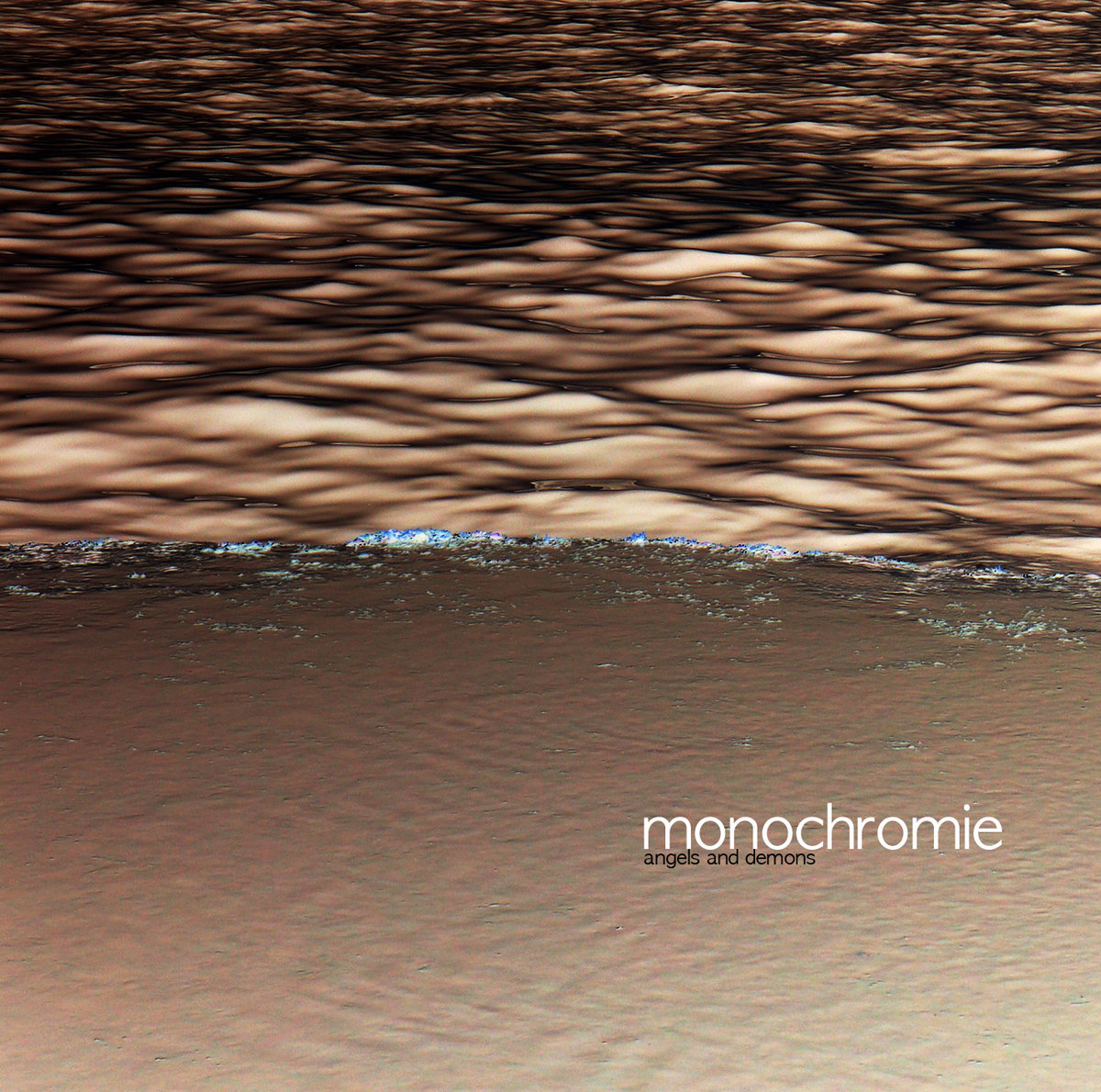
Monochromie – Angels and Demons

LISTEN

Track List

1 - Skylines
2 - A Sunny Afternoon
3 - Erosion
4 - Sniezny Krajobraz
5 - White Storm
6 - Frozen Sea
7 - Untitled (Snow)
8 - Undefined Field
9 - Ataraxie
10 - #1
11 - Echos
12 - Antennas
13 - Gorace Zarzewie

Monochromie - Angels and Demons

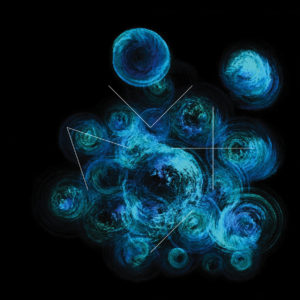
"Angels and Demons" is Monochromie's debut album. Built from piano melodies, tinged with synthetic textures and industrial sounds, his music shines and darkens into one single movement. Along with 13 songs on the album, we travel between heaven and earth, light and gravity, among angels and demons which inhabit our worlds and Monochromie’s music.

Sigur Ros, Pan American, Explosion in the Sky, Godspeed You Black Emperor, Thee Silver Mt Zion, Brian Eno, Ryuichi Sakamoto and Alva Noto or Frederic Chopin, Erik Sati and the sonatas or impromptus of Franz Schubert are among the many influences of the artist.

In a constant round trip between a soothing breath and a noisy storm, Monochromie’s music plays with our deep emotions and produces the new colors in the palette already rich and contrasted of Fluttery Records artists.

REVIEWS

Sound Colour Vibration / Erik Otis

What makes Angels and Demons a really different album than anything else coming out right now is the consistency of different worlds sitting boldly and perfectly together and exactly how they relate to one another. The piano work is classical in direction and the field of electronics gives the piano harmonies a very different aura. When analyzing classical forms of music, I have always envisioned this type of bridge being created where modern musings into sound collages can sit side by side with chamber influenced composition work. Fields of lush soundscapes create a euphoria inside of Angels and Demons, leaving the possibilities of sound to the imagination and not just what comes into the speakers. Music this colorful and open to interpretation elevates my senses in the widest spaces possible. This elevation puts me into a really relaxed and calm state, allowing myself to enter the music in a completely unabridged way. One of the stand out pieces for me is the track “Erosion”. With a faint trace of electronic percussion, the mix becomes saturated into a field of mutated static and beautiful melodies. It’s a sound that makes me feel a deep sense of inner peace and it’s an impact upon initial listening that has stuck in my mind since the moment I made contact. The layers that swell up and encircle the music is breath taking and it’s the type of direction in composition that I absolutely love about modern music. I have really been enjoying a lot of ambient music coming out this year and Angels and Demons from Monochromie is a new direction in this field of music. If you love records that are minimal in design, highly colorful and drifts into unusual sheets of landscapes that unfold in the most intricate forms, you have to hear this record.

MRU / Vanessa Baker

The calming melodies are kept fresh with synthetic textures and industrial sounds that invigorate the music’s pace, adding energy just when listeners have been eased into the soothing world of Monochromie. “Gorace Zarzewie,” Polish for “Hot Embers,” is the album’s final track, and provides the only vocals, hauntingly beautiful and spoken, rather than sung, by a woman. The piece returns the listener to the same angelic place the album began, but changed. For his foray into the musical world, Monochromie’s efforts are mature and strong. Angels and Demons brings the listener on a pleasant and varied ride, communicating its theme confidently and without words. The sounds speak for themselves, simultaneously capturing the ears and emotions of listeners, and not letting go.

A Closer Listen / John Kantos

It doesn’t happen often that we hear an album we have a hard time categorizing, but that is what happened when listening to the debut album of Wilson Trouve aka Monochromie. The album’s artwork immediately immerses us into a world of dark horizons, unusual images and the strangest color formations. Trouve creates soundtracks to these almost surrealistic images, soundtracks that encompass a variety of emotions and sound experiments. The album’s musical style drifts from ambient electronic to melodic piano pieces, and from there to shoegazing static and distortion. Monochromie seems to follow certain paths, at times more minimal, at others more cinematic, but he often deviates from each path, mixing different elements, producing a sound that is rough and abstract, tense and dreamlike at the same time. Being a visual artist perhaps has enabled Trouve to notice the subtleties in each sound and how they can be combined to accompany images and stories, or create their own. He also cites a number of post-rock bands (as we used to call them) such as Explosions in the Sky or Sigur Ros as influences, and since his sound doesn’t bear many similarities to that of the aforementioned artists, it is safe to say that what he drew from their music is the ability to paint emotional soundscapes in a way that is very personal. As we continue listening, Angels and Demons becomes hypnotic, yet has the familiarity of a story we used to be told as children. This could be why Trouve chose to close the album with “Gorace Zarzewie”, the only track with vocals (in Polish), which delivers images of an enchanted, pristine forest and has to be considered one of the album’s highlights, along with the ambient electronica of “Erosion.” What it does best however is point out what Monochromie excels at: making music that is full of hope and fear, vivid colors and darkness, feels like a dream, but has the mundanity of life.

William Henry Prince

Sensual cycles and small cascades.There is a famous statement by French writer Andre Breton: “It all leads one to believe that a certain place exists in the mind where life and death, real and imaginary, past and future, the expressible and inexpressible, high and low cease to be perceived contradictorily”. ‘Monochromie – Angels and Demons’ isn’t a work of surrealism, but it does take you on a vacation to somewhere close. I had a great friend, Simon Carroll, a potter, who loved how glazes would often rivulet if applied too liberally. It was a wonder and a treasure for him. It was a small but beautiful part of the whole process of his expression. There was a predictable chaos to it – the glaze would river downwards, yes, but in a way that was always unique, depending on texture, surface and shape. It could hijack other substances, mix, change colour, even appear to disappear.

Throughout this album, there is subversion at work beneath the piano and light. It isn’t a darkness or violence, but the droning, fizzing synths introduce the idea of change, transience and uncertainty. Rather than unsettle, they give breadth to the sound and the experience. All the thirteen tracks are vastly enjoyable, offering trips through different landscapes and planes, allowing the listener to interpret, explore and create. The keyboards and pianos spike, cascade and flow in sensual little cycles. Though nowhere near the sparseness of Philip Glass or Erik Satie, there is a lot of room here, some nice quiet spaces.

Caleidoscoop / Jan Willem Broek

The Fluttery label is still amazing me. The combination of artists from around the world, the quality of the artists and the ever-widening range of musical styles. The common thread seems more and more melancholy of how the music goes, hard or soft, or even experimentally accessible. New on the label, the French artist Wilson Trouvé, who is showing his monochrome debut Angels And Demons. Monochromatic light is light of a wavelength or color. Also in art monochrome work is an onecolor work. That principle is what the music of Trouvé certainly typifies. The genres he crosses is true modern classic, neoclassic, glitch, ambient and post-rock, but he knows there is a consistent set of melancholy to create. So instead of the various styles to separate, he brings together music and let them breathe the same atmosphere. Monochrome diversity it would paradoxically be called. The 13 instrumental compositions present here, are often built around the polyphonic piano sounds, both evoke Erik Satie and Chopin as Ryuichi Sakamoto, Nils Frahm, Max Richter and Sylvain Chauveau. That he continued to fill with wave-like textures that are reminiscent of the Cocteau Twins, glitch in the manner of Fennesz and Alva Noto, postrock the mysterious realms of the old Sigur Rós, the ambient of Harold Budd and Brian Eno, the desolate beauty of Library Tapes, the gritty shoegaze of Bitcrush and intense orchestrations of Ólafur Arnalds. But precisely because he managed all these facets in a natural way to exist side by side, getting his music a distinctive monochromatic sound, which minimaler than the above examples. In the final track you hear even a certain Anna in Polish speaking through the music, which is a nice effect. An album with many ingredients, but a tender face shows. Depth, emotion splendor so beautiful and knows how to shine in Autumn.

Mescaline-Injection

Post-rock without rock, rock without guitars, so to speak. Maybe this is what Wilson Trouve from France presented with his solo project Monochromie. On his album Angels and Demons, he goes on a similar expedition as thousands of instrumental bands that this genre has produced in recent years. But "Angels and Demons" is more converted in the paths of experimental sound art. Part of the guitar (the rhythm comes from the heart, anyway) embodies here especially drones and swirling ambient surfaces. The piano excels with some beautiful melodies, accompanied by noise of gentle click'n'cut-tinkering that bring to the music on the one hand a high coefficient of tensions and high contrasts, on the other hand, there is sometimes sacred moments with devout synthesizers. The monumental size of generous fine details are really worth listening moments. "Angels and Demons" is a relaxing low-key album that invites you to linger melancholy, and it could be as much appreciated by post-rock friends than by fans of drones and electronic sounds.

Beach Sloth

Monochromie represents a natural evolution. It began with Max Richter's low-key modern classical Forays into. Leyland Kirby expanded this palette by placing a greater emphasis on the electronic. What is does Monochromie follow-up on Kirby's ideas and infuses them with Considerable amounts of distortion. At times the levels of distortion are nearly unbelievable. Many times this distortion veers into Pita's emphasis on making Mego or even more dramatic through classical volume controls.

The beginning of the album is deceptively calm. Monochromie lulls the listener with gentle piano on 'Skylines'. Things progress from there into territory considerably noisier. 'A Sunny Afternoon "is nearly giddy in its absolute hopefulness. It is a happy, bright, colorful piece. 'Erosion' is perhaps my favorite piece on the album. Here Monochromie details of the effects of the slow degradation of the basic loop. In a way this is similar to William Basinski's disintegration loops. Like William's work there is an almost romantic quality to the piece's slow demise. Layers upon layers of distortion and noise are thrown on top of the piano yet Continues to strive through the static. Another track 'Undefined Field' takes a similar approach in nature yet it is low key. Leyland Kirby is directly felt on 'Frozen Sea' which sounds directly inspired by him. The slow build and heavy electronic wheezes are reminiscent of Kirby's work.

'Angels and Demons' is a constant struggle between the classical and electronic elements. This pits the organic against the digital. Listening to the struggle between the two separate elements makes it infinitely interesting. Hope neither side ever wins.

Think Muzik

Citing Influences ranging from Explosions in the Sky to Frederic Chopin to Franz Schubert, Monochromie is well-versed in several styles of music, Including ambient, electronic, post-rock and even classical. This variety is well presented throughout the album. "Angels and Demons" relies on electronic ambient music played in tandem with heavily distorted spheres of live instruments to create melody, which is a tactic employ many post-rock bands. This album has no vocals. The music at times sounds uplifting and proud, and at others downtrodden and sad. These kinds of contrasts are present at every turn during this album. I can proudly give this album better marks than many of the other post-rock albums I have reviewed 'of late. This is on par with Hammock's new offering, and even better than Inner Trip and Home Never. I highly recommend this to fans of down tempo music and electronic music, as well as the average fan not experienced in the post-rock.

FLTTRY043
Release Date: September 03, 2012
© Fluttery Records

Also available on:

AL_X – AL_X

LISTEN

Track List

1 - Intro
2 - Here Before
3 - Bloom
4 - Lose You
5 - L.A.G
6 - Prize
7 - What Is To Be Done
8 - Failed
9 - Roadkill
10 - Righteous Path
11 - Honey Trap
12 - If I Did
13 - Hymn For Moya /If There Is A Light

AL_X - AL_X

"Writer, electronic music producer, arranger, multi-instrumentalist and serial collaborator Alex Dunford has, after a long and tortuous gestation period, finally released a masterful album of exquisite, reverberant melancholy, full of keen, persistent melodies and darkly sculpted, piano-driven soundscapes under the name of Al_X.

With the aid of co-writers and vocalists (Jeff Jepson, Dom Veron, Kate Smith), themselves coming from worlds more akin to folk/blues/jazz/other, the album brings together vintage drum machines and synths, toy instruments, strings and string loops, acoustic guitars, Reverbs, Delays, and miscellaneous tools from Alex's menagerie of gear into a seamless and cinematic whole. The album is reminiscent of Brian Eno, Sigur Ros, Depeche Mode, Radiohead and Recoil. With these influences in mind, Alex takes us on journey through his tastes, his mind, and his favorite instruments in this collection of cinematic pieces and soundscape driven songs".

REVIEWS

Evil Sponge

The record kicks off appropriate enough with Intro, a nice ambient upswell to start the album. Then he launches into it with Here Before the centerpiece of which is a female vocalist, who has a high-pitched girly voice, like Alison Shaw from The Cranes. The music grows until it achieves a nice density, with layers of synths almost swamping her voice, before fading out to an outro of strings. Very lovely.

Bloom takes some mid-tempoed beats and the fast tremoloed guitar from a Lights Out Asia record, and adds in layers of strings and keyboards. There is one point that is gorgeous -- the guitars are whirring so fast they create a faint ambient blur and Dunford adds in a tinkling keyboard bit. Very nice. The general Tortoise-ness carries on in our fourth track, Lose You, which features our second vocalist. I think. It is another female voice, but she sounds a little higher pitched and more human as opposed to that Alison Shaw little girl/pixie squeal. Under this, there are some spacey electro sounds, a deep bass beat, and loud strings. This song gets loud and fun, like Tortoise remixed by late era Underworld.

Overall, i have to say that i enjoy most of this record. It gets a little dull in the middle, and i do wish for some kind of liner notes to explain what the heck was happening with the vocals. However, if you like electro pop, then this is a pretty fine choice.

Sea of Tranquility

AL_X is multi instrumentalist Alex Dunford, from the city of Liverpool England, hometown to many a famous artist. The music AL_X makes on his selftitled debut album can be categorized under Electronic music, influenced by famous electronc bands as we have like Sigur Ros, Depeche Mode and the like.

The music is a combined effort of great synth tones with nasty twists & turns as we also hear drum machines, music loops etc. All the music is composed, produced and all instrumentation played by AleX Dunford.

A bundle of nicely composed soundscapes is brought to the listener and I must say it is really really entertaining to listen to this music. It has an enlightning feel to it, and truly is able to cheer you up when you are having trouble enjoying yourself.

A Nasty Suprise

Fluttery Records is a most appropriate label for one-man-band AL_X, Alex Dunford. On February 10, the writer, producer and all-around instrumentalist from Liverpool released his first LP, and it is certainly fluttery. The self-titled album has a unique ambiance that flutters through your head, droops your eyelids lower, and floats you almost to serenity.

On the surface, “AL_X” is an experimental electronic album; Dunford uses plenty of synthesized sounds and drum machines along with strings and a piano. The tracks vary from heavily industrial, tech tunes to overproduced sonatas.

The tracks that sick to either of those extremes, though worth listening too, are not the strength of “AL_X.” The beauty of the album comes from slowly meshing the harmonies of digitalism with orchestral strings and piano. This is most apparent in the first four tracks.

The song “Intro” would fit seamlessly to the soundtrack of a psychologically thrilling movie – just at the final plot twist. It rises in intensity as the wandering ambiance builds up with more and more layers of repetition.

The third track, “Bloom,” is for the movie’s happy ending. It is the loveliest track we’ve heard this year, and is the highlight of “AL_X.” It is led in by a new wave hum akin to the sounds of M83. It rises and falls throughout the track, much like the whir of Sigur Ros’s “Takk.”

Once Dunford starts adding to the groundwork of “Bloom,” it results in a digital sonata. Bells chime in, piano chords strike, and orchestral strings shout. Dunford scratches a beat around the harmonies making a song you can both groove and cry to at the same time.

The closing track, “Hymn for Moya / If There is a Light,” is as weak a closer as there is. There is a haunting hymn with piano atop that doesn’t go anywhere. It is more of a rambling song that could have been condensed and used as a dividing track on the album.

But that’s what “L.A.G.,” a two-minute piano solo, already does; in the fifth slot, it divides the memorable songs from the forgettable songs.

The latter half of “AL_X” does have two bright spots. The glitch-tune “What is to be Done” and the humbler “Roadkill” are enjoyable.

FLTTRY034
Release Date:  February 10, 2012
© Fluttery Records

Also available on:

Astrowind Fresh Wind – In The Valley Of Dreams

LISTEN

Track List

1 - Wind on the Plain
2 - Case with the Colonel Aleksey Leonov
3 - Lost and Found on the Moon
4 - Mute Pilots
5 - Out of Time
6 - Prism
7 - Aleksey Leonov See Dreams
8 - The Return
9 - Pereval
10 - Geocomp
11 - Nocturne for the Different Moons
12 - Questions Left Unanswered

Astrowind Fresh Wind - In The Valley Of Dreams

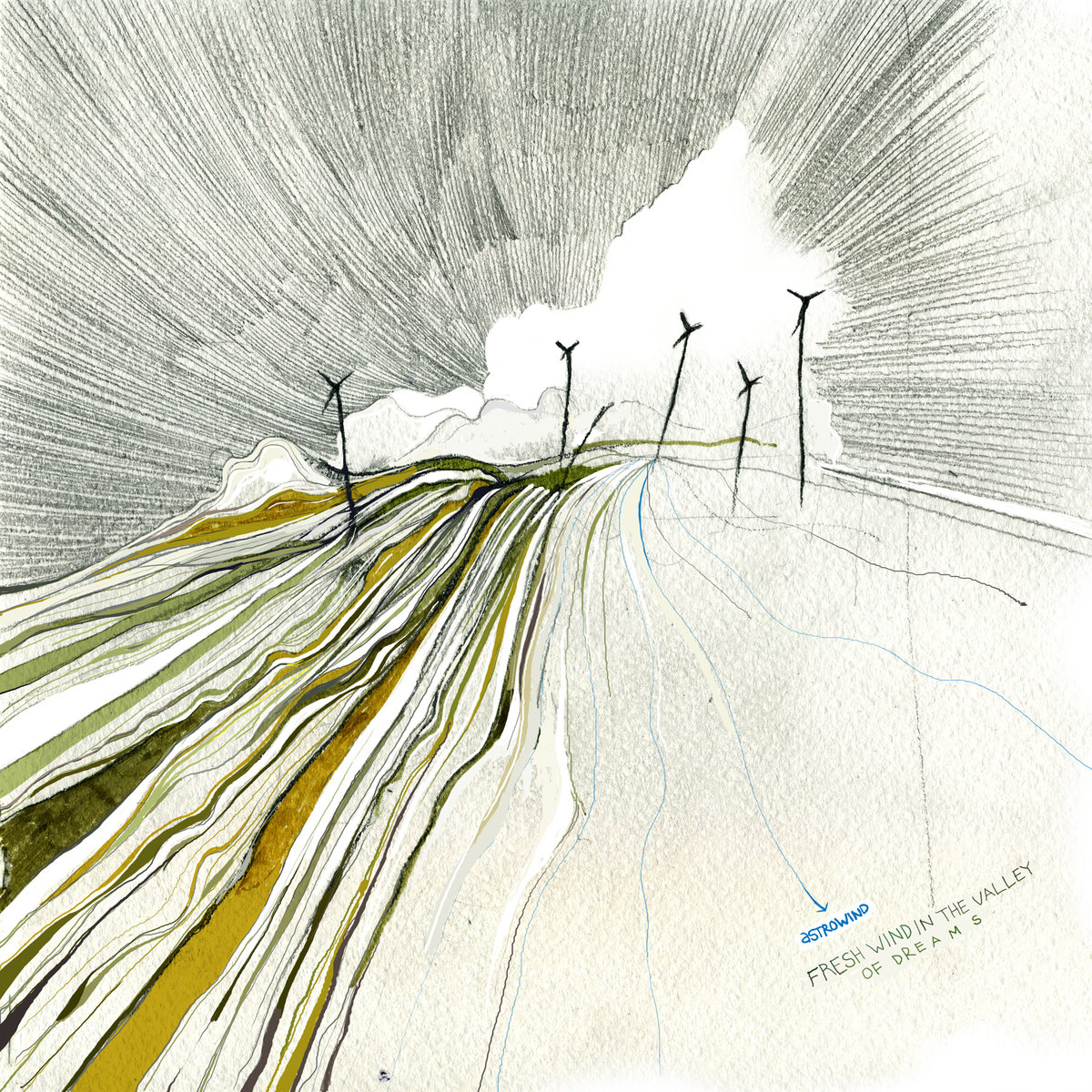
Many Astrowind’s tracks are themed in outer space and its secrets – ambient music attempts to grasp the unknown.

Astrowind offers a spiral of accumulated experience of what has been seen, heard, dreamt and read, the desire to get away beyond the horizon of consciousness and sub-consciousness through musical experience.

The album is dedicated to the cosmonaut Aleksey Leonov - the first man in outer space and a person who has always appealed to the author. Such tracks as The Case with Colonel Aleksey Leonov, Lost and Found on The Moon, Mute Pilots and Aleksey Leonov See Dreams are also inspired by the movie 2010: The Year We Make Contact (a sequel to Stanley Kubrick’s 2001: A Space Odyssey) which tells the story of an American-Russian space crew flying to the Jupiter System on a ship named after Aleksey Leonov. The author hopes that Aleksey Leonov will hear this record. This tracks greet him.
The album’s title track, Wind on the Plain, has been named after Debussy’s Le Vent de la plaine. This is a tribute to the composer who has been an inspiration for Astrowind for a long time.

The album was recorded in collaboration with Mahi Bukimi. Kriipis Tulo is grateful to Mahi Bukimi for his contribution in the recording of this album.

The album provides a fusion of nostalgic echoes of Soviet news broadcasts, an echo of old radio sets and the cinematic patina of artwork by censored Soviet filmmakers. These are islands of memory, the past overcoming the future.

REVIEWS

Against The Odds / Chris Antonoff

Kriipis Tulo is a prominent sound designer whose long been regarded as one of the key figures of the Latvian electronic music scene. In his latest release he made heavy use of vintage synthesizers for a truly dark, eerie and cold feeling. Listening to Fresh Wind In The Valley Of Dreams will set one's mind to wander in various directions only to find melancholy and desperation waiting at the end. You can really feel the beauty and the coldness of the digital in Tulo's music which offers an intricate and spectacular transition into a whole another dimension of existence. His music creates beautiful, harsh and desolate soundscapes in which your imagination to roam. If our everyday life becomes a pattern of zeros and ones Kriipis Tulo's music may very well be the soundtrack if it enriched by the machines' cold embrace. With its complexity and unorthodox approach Tulo's album is sure to find its way to many new followers in the realm of experimental music.

A Closer Listen / Jeremy Bye

Space has long been a source of fascination and inspiration for electronic musicians; clips from NASA recordings have been used to give an extra depth to ambient works pretty much since the genre began. Kriipis Tulo, the Latvian musician who records as Astrowind, is no different. Fresh Wind In The Valley Of Dreams is inspired by – and dedicated to – cosmonaut Aleksey Leonov, the first man to walk in space and, later, the commander of the Russian half of the Apollo-Soyuz mission in 1975 which saw the United States and the Soviet Union work together in space for the first time.

As might be expected, clips of Leonov’s space flights make their way into Tulo’s work but they just about avoid cliché and remain unobtrusive. It is perhaps that first space-walk that informs this album more, with a real sense of weightlessness in many of the tracks; with little in way of percussion or bass, the synths and organs here sound as if they are floating without anything to anchor them to the earth. It certainly makes for an atmospheric ambient album, and there’s enough detail, outside of the radio clips, to hold the interest. Alternatively, aside from the slightly clunky transitions between tracks it’s possible to let the album play in the background and imagine drifting weightless in space oneself.

If there’s one failing of Fresh Wind In The Valley Of Dreams, it’s that Tulo favours atmosphere over anything distinctive or memorable in his arrangements. The downside of the consistency across the album is that it lacks a little character and it’s really only the piano on the penultimate track “Nocturne for Different Moons” that adds something new to the mix. As it stands, though, Astrowind has made a thoughtful album to soundtrack our dreams, as we gaze to the skies and wonder.

Migrate Music News / Jordan C. Small

Kriipis’ tracks are so far out there that I believe that he has come in contact with aliens through his voyage through space and sound. He presents his artwork in a way that allows the listener to feel as though they are sitting next to him in the cockpit of a rocketship, and the only thing there is to hear is the deafening sound of the rocket fuel buring behind them; that sound is exactly what Kriipis is attempting to portray to the listener. Although the rhythm is subtle, it is still possible to sense Kriipis’ portrayal of time. Kriipis’ art can only be described as profound, but only so if you, reader, close your eyes and imagine a vast void of outer space in front of you. This is a very well put together album.

We at Migrate only have mad props to give. Myself, being very interested in the vast reaches of space as well, am very intrigued by Kriipis Tulo’s exploration into deep space. Lastly, I must say that this album would be a perfect addition to any astrological collection of bits and bobs, but also just any old record collection. So, reader, I suggest you buy this album, get your telescope out on the front lawn, and listen to this record while gazing at the stars; you might hear more than you bargained for.

FLTTRY033
Release Date:  February 10, 2012
© Fluttery Records

Also available on:

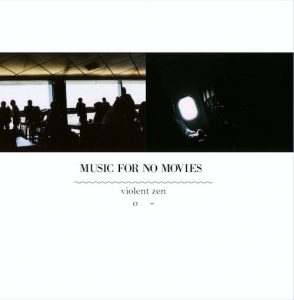
Music For No Movies – Violent Zen

LISTEN

Track List

1 - Earth Job
2 - Air Games
3 - Space Trees
4 - The Dog and The Downpour
5 - Waterquake
6 - Fire and Sky
7 - Arvo Moon
8 - Wind Wash
9 - Stupid American Elephant Drunk Joy Joke
10 - Glace et Soleil
11 - Gold Snow

Music For No Movies - Violent Zen

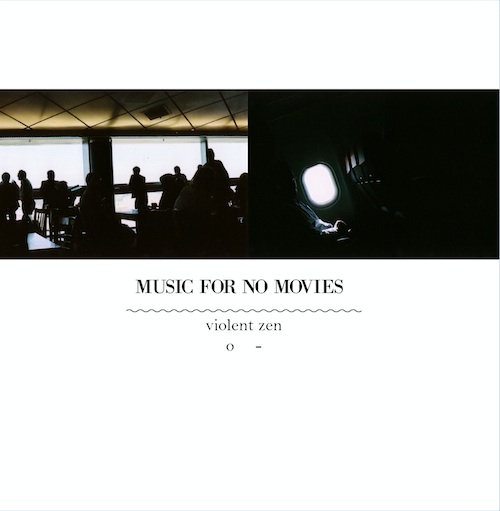
Music For No Movies is Federico Fantuz's electro-acoustic / ambient tunes. With his guitar strings and ambient pads he creates a warm cinematic atmosphere. Violent Zen is his 11 piece debut. As the Italian journalist Aurelio Pasini (Il Mucchio Slevaggio, Radio Città del Capo) points out “Not only does Music For No Movies turn the very idea of soundtrack inside-out - it also succeeds in creating experimental yet intriguing and deeply fascinating soundscapes. Very well done indeed.”

Here is what he says about his music:

“My name is Federico Fantuz (Bologna - Italy) and I am a guitar player, or better a musician. Or at least this is what I aim to be. I started playing guitar when I was 12, and carried out scattered studies under the influence of a wide range of music styles. I started on my own and only later on I took a few lessons both for electric and acoustic and classic guitar.

But the most precious sources for my musical growth and development have been the encounters with my fellow musicians. I've always shared my knowledge with them, but most of all I've learnt and tried to learn those vital elements that are never taught in schools: the importance of jamming, of confronting with different instruments, the search of a personal sound that goes beyond the techniques, finding the personal space within an arrangement, listening ceaselessly to the “music continuum” and one’s own personal “voice” within the “chorus”, and last but not least learning from all the mistakes, and in fact use them to create new modes and worlds. For all this and more I thank:

Beatrice Antolini and her band (among which Luca Nicolasi, who helped me thoroughly in my soloist project), Vittorio Carniglia and Nave Cargo Parampampoli, Nicola Barilli and CuldeSac, Sergio Altamura, Antonio Stragapede, Luca Bernard, Tim-Trevor Briscoe, E.L. Quartet, Edgar Cafè, Shiva Bakta, Marcello Petruzzi (33ore), Simone e Luca Cavina, Tubax, Pino Basile and Sergio LaViola, La Fionda Teatro and Jorge Bosso, Loungedelic and Pippo de Palma, Mattia Boschi, Alberto Fiori, Carolina Pintos and Paolo Poggio, Tristan Honsinger, Niccolò D'Ambrosio and Laura Caressa, Mariposa and all the musicians that I have met, even for a short span of time, on my way.

My music path does not have stages, but just passages; it has never followed one single direction, but on the contrary it has met different genres without concentrating on a particular one.I've always tried to mix and match everything that my intuition and experience suggested me on the spot without following any rules .

And after wandering through never ending and spontaneous jam sessions and bands with different music backgrounds, finally I've got here, in this room, from where I am writing now. And right here I composed Music for No Movies. Alone, but with many voices inside.”

Federico Fantuz

REVIEWS

Rolling Stone / Paolo Agnoletto

Music for No Movies is a new project by Federico Fantuz, a very talented guitarist that has put together a group of beautiful instrumental songs in search of the right motherhood movie: the aim of the author is in fact to find for each theme a film in which it can fit and hopefully be used. This interesting collection of tunes, inspired by artists such as Brian Eno (in particular “Original Soundtracks 1”, written with U2 under the name Passengers) and Vangelis, international masters when it comes to writing soundtracks and atmospheric songs, is enhanced with a personal and gentle touch that makes this album a genuine and fascinating listen.

"Waterquake" is an exhilarating and haunting track suitable for a great dramatic picture whereas the opener "Air Games" operates in the area of a crepuscular and gently melancholy. Other outstanding songs are the irresistible "Earth Job", adorned with unconventional sounds like chair creaks and coins falls, perfect for a mystery picture, "Wind Wash", particularly fitting for a positive final sequence in a sad drama that ends full of hope, and "Fire and Sky", that only asks to be used in an historical movie, maybe in the Spain of the eighteenth century. The intriguing and obsessive "Arvo Moon" is instead suitable for a sequence in which is described the passage of time: in general the instruments' assemblage is excellent and the arrangement very smooth in order to create a music in which you can pleasantly lose yourself.

To summarize, "Music For No Movies" is an interesting and intriguing piece of work that deserves to be listened to and appreciated: this soft music requires an attentive and aware audience that has to be keen on being cradled by these evocative and imaginative tunes and, hopefully, a film, a sequence, an history in which it can function as soundtrack.

The Silent Ballet / Matt Gilley

An atmospheric, creeping pizzicato. Shadowy eastern melodies. A thin mist of electronics rises from the damp ground, curling around the trees. A snap betrays movement close by. A dog stands and sniffs curiously through the rain. The protagonist warms his hands by the fire. An ominous rumbling shivers through the ground. This is a slow-moving ‘no movie’, unfurling through subtle changes of tone and the hints of track titles. If not for some strange contradictions, Violent Zen's cinematic tale would have been completely exquisite. While most of the titles evoke nature, "Space Trees" suggests sci-fi, and contains an intrusive vocoder. "Stupid American Elephant Drunk Joy Joke" is as comedic as its name. Although these two tracks amount to only a few minutes of running time, they disrupt the narrative. There is also very little evidence of the violent part of Violent Zen. Nevertheless the album is descriptive and accomplished. Next time around Music for No Movies may well become the sound-painters they aspire to be.

Indie Eye / Michele Faggi

Violent Zen is the first full length with the name Music For no Movies, a project by Federico Fantuz, a Bolognese guitarist known for his long artistic co-operation with Beatrice Antolini and a large number of other musicians such as Vittorio Carniglia and Nave Cargo Parampampoli, Nicola Barilli and CuldeSac, Sergio Altamura, E.L. Quartet, Shiva Bakta, Loungedelic and Pippo De Palma, Mariposa, Edgar Cafè, just to name a few. The cd includes 11 instrumental tracks generated, in a way, from a certain landscape intuition that Federico describes with an image of the absence. “Music for dead moments, dead tempos”, acoustic illusions in search of an optical effect. A path that has a lot of the traits of the acousmatic search, at least in that double movement capable to immediately generate sounds disconnected from a phenomenological environment and in fact, both from an inductive and deductive process, able to produce imaginary spaces, mirages, real Doppelgänger. This process is very close to the idea of immaginary soundtracks that we have been loving for a while and that for several reasons encounters part of Bruno Dorella’s music. The structure of Earth Job, the introductory track, brings together all these elements with a time rhythm that seems to be taken from Danny Elfman’s imaginary chronometry, plunged in an amplified phenomenal context.Together with the music of another big illusions weaver, Alessandro Stefana (reviewed here and here on Indie-eye.it), that of Federico Fantuz owns a very rare sensibility, capable to describe a sensorial space that has no function, a place with no hypertrophic images or encyclopedic simulacra and for this a possible visionary.

EtherReal / Fabrice Allard

We follow here the discovery of the label Fluttery Records, generally very anchored in the kind of post-rock. We browse their catalog diagonally, and when a record seems to stand out, we decide to talk about it here. This is the case for Music for no Movies, a solo project by the Italian Federico Fantuz, who signes here his first remarkable album.

The disk begins with Earth Job, which reminds us of something...sounds played backwards, a fractured style, we are not far from the awesome madness of a Leafcutter John. A music which gives the impression of chaos while sliding along melodies both simple and powerful. The instrumentation is not very clear, this first title swarming with various sounds, both acoustic and electronic, while « Air Games » demonstrates simplicity with sounds of acoustic guitar accompanied by layers and crystalline sliding.

FLTTRY017
Release Date:  April 21, 2011
© Fluttery Records

Also available on:

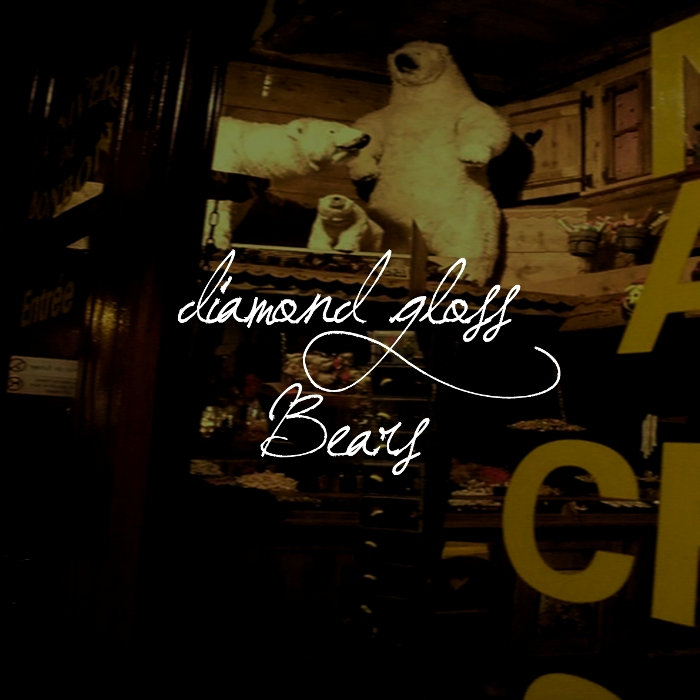
Diamond Gloss – Bears

LISTEN

Track List

1 - I Am Black And Blue All Over
2 - Canadians
3 - Walnut And Trees Tables
4 - Filter Fat Corner
5 - Argyle Square
6 - Glasses
7 - Step Piece
8 - Fawns

Diamond Gloss - Bears

Bears is the debut album of Gonçalo Pereira, under the alias Diamond Gloss. His sound and melodies incorporate elements of modern classical, electronica, idm, ambient, and post-rock music with live instrumentation.

Pianos, micro-beats, effects-treated guitars, music-boxes, lo-fi strings arrangements and other acoustic instruments such as glockenspiels are the vehicles that shape this carefully produced and layered, non-linear quest. His influences travels among modern composers such as Arvo Pärt and Henryk Górecki, the ambient experiments of Brian Eno or his peers Autechre, Hammock, Sigur Rós, Helios and Múm.

Bears takes us on a journey through landscapes and environments that oscillate between contemplative, tender sometimes mournful symphonic melodies and gleeful, joyful and explosive moments.

REVIEWS

Central Michigan Life - Jay Garry

Diamond Gloss’s debut album “Bears” is a fresh take on the usual dark, droning styles of post-rock and ambient IDM. His solo work features many of the set piece calls of a post-rock/ambient IDM album with its slow, passionate piano work, droning background sweeps and glitchy electronics, making for an album that easily showcases its influence from acts like Helios, Secede, Sigur Rós and Múm.

From that basic starting point however Diamond Gloss adds these very happy and high pitched instruments like music boxes and glockenspiels. The inclusion and use of these instruments take the usually serious emotional tone of post-rock and inverts it into an almost innocent and nostalgic, emotional style.

It’s hard to describe through words alone how this transition is accomplished but this sound is strong and striking when experienced. Songs like “Walnut and Trees Tables” invoke the thought of taking a nap in a kindergarten music room as an autumn evening breeze chills the air outside; it’s peaceful, serene, and calming.

Slave State - Michael Porali

It was a suprise for me to discover a new record label (Fluttery) starting in 2011 with a debut "Bears" by the Goncalo Pereira, the man behind the Portuguese post rock / drone project Diamond Gloss. And what a gateway for me! Bears is a journey into a dream world you are allowed to visit- at least, with musical help - with repetitive chunks of dark drones, unique mixes by Pereira, mediocre noise music with backwards samples which are far beyond being ordinary with the nice Glockenspiels. All in all, "Bears" about everything I need for the next few months. But are you able to sit still with wide open minds for a good hour? I dare to promise to "Bears" will reward you richly!

Caleidoscoop / Jan Willem Broek

Neoclassical, ambient, idm and glitch are also woven into his intimate post-rock patchwork. Namely, aside from the electronic sounds, glitches, and symphonic harmonies, one can also hear several sometimes electronically transformed acoustic instruments or fragments thereof, from mouth-organ to typewriter, guitar, and bowed string instruments. This is further colored by means of desolate piano pieces. The music is very modest and sad, which in all likelihood is related to the fact that he dedicated it to his late wife. The serene and restful music pleasantly enters the subconscious, like a daydream, lovingly covering the nightmare hiding beneath.

The Silent Ballet / Richard Allen

As the album winds down - quietly, like a bedtime story - the listener is left with the feeling that the artist may be well acquainted with the shadows, but prefers to live in the light. The album's last natural sound is that of a person splashing in a puddle, one of the most joyous and least self-conscious of all human acts. This sound provides the impression of bright umbrellas and matching plastic boots, a break in the clouds, a sudden spring after a wearying winter.

EtherREAL / Fabrice Allard

After each element in its right place, the rest seems clear. Melodies are amplified and are growing, some arrangements appear as ethereal scapes, melodic loops and rhythmic elements, a kind of maracas on Canadians or some wonderful dry snaps and cracks on Walnut And Trees Tables. Bit-by-bit, the sound thin down, all the elements are mixed together as an abstract ambient, a dream refined by cracking and bright tinkling (Argyle Square) or a melody of piano (Filter Fat Corner).

FLTTRY011
Release Date:  January 25, 2011
© Fluttery Records

Also available on:
“Timelessness” by Dan Caine and Musicformessier

Timelessness is a collaboration between two inspired ambient guitarists: Dan Caine from England, and István Csarnogurszky from Hungary, under the alias “musicformessier”. It is an album of peaceful, transcendental and atmospheric songs, where the profound, emotive guitar lines and textures of Dan Caine converge and harmonise with the poetic, cosmic tones of musicformessier. The colliding […]

Read More

Jackson Pollock of ambient post-rock: Dan Caine

Dan Caine is ambient/post rock musician from Merseyside, England. A pioneer in the movement, Caine uses powerful, layered guitar melodies to create an atmosphere of an intense range of thought and emotion as he explores the depths of the human psyche. His music is a free-flow of subconscious urge and instinct; a deep dive into […]

Read More

Seasons with OP3 & Runes

‘AWSS’ (Autumn.Winter.Spring.Summer) is a collaboration between OP3 & Runes(Manchester, UK) that features vocals for the very first time. Minimalistic piano themes, a beautifully haunting string quartet and some well structured electronics became the perfect basis for some deep, heartfelt and ethereal at times vocals by the amazing Runes. AWSS by OP3 & RUNES With OP3 […]

Read More

Diamond Gloss comes with his third album “Primavera”

Gonçalo Pereira (born 1984. Lisbon, Portugal) is a multi-instrument player, post-rock, ambient electronica musician and producer. Pereira first started as the frontman of the post-rock band How Comes The Constellations Shine before establishing himself as a solo artist under the moniker of Diamond Gloss. His sound and melodies incorporate elements of modern classical, electronica, idm, […]

Read More

Shopping cart0
There are no products in the cart!
Continue shopping
0